
Table of Contents
- The Real Breakdown of Why Custom Workwear Costs More
- Embroidery vs Screen Printing Cost: Which Decoration Method Fits Your Budget
- Material Quality and Fabric Durability: What You Are Actually Paying For
- How Bulk Ordering Custom Apparel Changes Your Unit Cost
- Why Durable Work Apparel Investment Beats Cheap Replacements
- Hidden Costs of Cheap Custom Workwear and Safety Compliance
- Supply Chain Transparency, Care Costs, and Replenishment Strategy
- Conclusion
- Frequently Asked Questions
Last Updated: September 22, 2026
The Real Breakdown of Why Custom Workwear Costs More
Custom workwear costs more because every piece passes through steps a blank shirt never touches: artwork preparation, digitization, setup, decoration, and quality control. The blank garment is only part of the bill. The rest pays for labor, equipment time, and the mistakes a shop absorbs so your logo lands straight.

Setup Fees, Artwork Preparation, and Digitization
Setup fees cover the one-time work of turning your logo into something a machine can run. An embroiderer digitizes your design into a stitch file. This process is not free, and it doesn't disappear because you ordered ten shirts instead of a thousand.
Embroidery vs Screen Printing Cost: Which Decoration Method Fits Your Budget
Embroidery cost comes down to volume and design. Embroidery has a digitizing fee, and its price scales with stitch count.
Color Count and Placement Complexity
Placement complexity, such as a wrap-around print or a name on each garment, is custom labor.
Material Quality and Fabric Durability: What You Are Actually Paying For
Material quality is where the real price gap lives. Fabric durability is measured in part by weight, often expressed as GSM, or grams per square meter. A heavier, denser fabric resists abrasion, holds its shape, and survives industrial washing far longer than a thin budget knit.
Garment Construction, Thread Count, and Wash Fastness
Garment construction determines where a shirt dies. Double-stitched shoulders, reinforced pockets, and taped neck seams add cost because they add labor. Thread count and stitch density affect how a seam handles stress. Wash fastness determines whether your logo and fabric color survive 50 laundry cycles or fade by the tenth.
How Bulk Ordering Custom Apparel Changes Your Unit Cost
Bulk ordering custom apparel lowers your unit cost because fixed costs spread across more pieces. Setup, digitizing, and artwork prep are one-time charges: order 24 shirts and each carries a big slice of that fee; order 240 and the slice shrinks to almost nothing.
Small Run Surcharges and Economies of Scale
Small run surcharges exist because a 12-piece order consumes nearly the same machine time as a 100-piece order, the press still has to be set up, aligned, and torn down. Economies of scale also improve branding consistency, since one large run produces matching colors across every garment.
Order Size |
Setup Cost Per Piece |
Unit Cost Trend |
Best For |
|---|---|---|---|
Under 25 pieces |
High |
Highest |
Testing a design |
25-100 pieces |
Moderate |
Mid-range |
Small crews |
100-500 pieces |
Low |
Lower |
Growing teams |
500+ pieces |
Minimal |
Lowest |
Full company rollout |
Why Durable Work Apparel Investment Beats Cheap Replacements
A durable work apparel investment beats cheap replacements because the cheap shirt gets bought again and again. Prove it to a skeptical owner by building a total cost of ownership (TCO) model on your own crew and letting the arithmetic talk.
- Acquisition, the per-piece price you pay at checkout.
- Decoration re-runs, every replacement garment needs your logo applied again, and that means setup or digitizing charges you already paid once.
- Maintenance, laundry labor, water, detergent, and the repairs or early retirements that follow heavy washing.
- Downtime and image, the shift a worker spends in a torn shirt, and the customer who notices your crew looks ragged.
Total Cost of Ownership and Replacement Cycle Math
Run the replacement cycle math on your own crew. A shirt that lasts six months gets replaced twice a year; one that lasts two years gets replaced once every two years. On a ten-person crew, that's twenty garments a year versus five, and every one of those twenty carries a fresh decoration charge on top of the garment price.
What Actually Drives the Lifespan Number
Lifespan is not a marketing claim, it is a function of construction choices you can inspect:
- Fabric weight and density. Heavier, denser knits resist abrasion and hold shape through industrial laundering. A thin budget knit pills and stretches out of shape long before it tears.
- Seam construction. Double-stitched shoulders, taped neck seams, and reinforced pockets add labor, which adds cost, and they are the first things cut from a cheap garment and the first to fail.
- Dye and print durability. Wash fastness determines whether your logo and fabric color survive dozens of laundry cycles or fade by the tenth. A faded logo is a branding cost, not just a fabric cost.
- Decoration method. Embroidery generally outlasts a heat-applied transfer, which can lift at the edges after repeated hot washes. If the garment outlives the decoration, you are re-decorating a perfectly good shirt.
The Hidden Line Items That Never Make the Quote
Factor in the costs that never appear on an invoice: reordering time, reprinting logos on replacements, and the professional image hit when your team shows up in faded, pilled shirts. That last one is hard to price, but customers notice. So does a safety inspector.
Hidden Costs of Cheap Custom Workwear and Safety Compliance
Hidden costs of cheap custom workwear show up as compliance failures, not just worn fabric. If your job requires high-visibility or flame-resistant gear, a cheap substitute can put your crew out of compliance and out of work.
Workplace Safety Standards and Custom Safety Gear
Workplace safety standards don't care what you paid. High-visibility vests must meet ANSI/ISEA 107 requirements, and flame-resistant garments carry their own certification. A Class 2 all-mesh hi-vis vest meets ANSI/ISEA 107-2015 Type R, Class 2 standards, the difference between a vest that passes inspection and one that doesn't.
FR Pearl Snap Work Shirt - Conqueror →
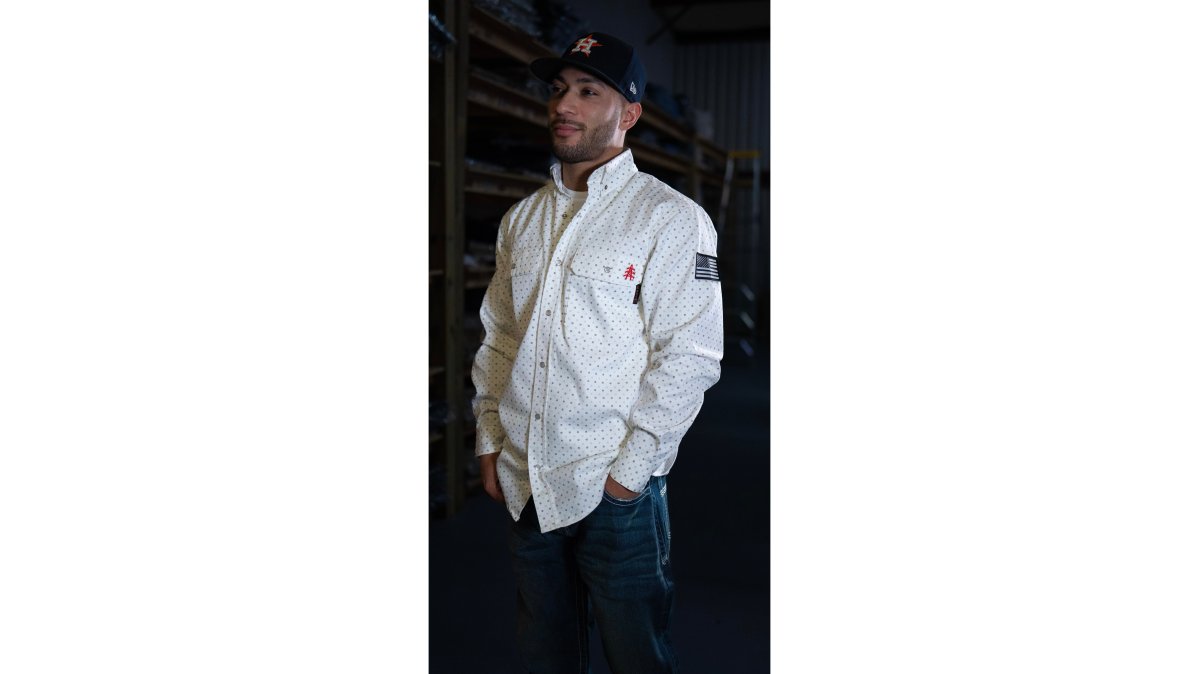
Buying non-compliant safety gear to save money is a false economy. If a garment fails inspection or a certification check, you're replacing the whole order anyway, and you may be sending workers onto a site without the protection the job requires.
Supply Chain Transparency, Care Costs, and Replenishment Strategy
Most articles about custom workwear pricing stop at the invoice. The three factors below are where the real long-term cost lives: where the garment came from, what it costs to keep it in service, and how you structure the next order so you never pay setup twice.
Supply Chain Transparency and the Price Floor
Supply chain transparency tells you where your garment was actually made, which matters when you're paying a premium for quality. Ask your supplier who cuts and sews the blanks, and whether decoration happens in-house or gets outsourced. If nobody can answer, that is your answer.
A practical checklist when vetting a supplier:
- Can they name the mill or factory that produces the blank?
- Do they hold any third-party social compliance or labor certification?
- Is decoration done in-house, or subcontracted to an unknown shop?
- Can they provide documentation on request, or only verbal assurances?
Maintenance and Care Costs by Decoration Method
Care costs are the quiet line item. Workwear that needs delicate washing or can't take industrial laundering costs you time and replacements, and the decoration method you choose changes your laundry budget for years.
- Embroidery is the most laundry-tolerant option. Stitched thread survives hot water, repeated agitation, and industrial laundering far better than most applied decoration. It costs more upfront, but it rarely needs re-decoration.
A few care rules apply across the board:
- Follow the care label, it exists for a reason.
- Wash flame-resistant garments separately from regular laundry.
- Skip fabric softener, which can coat flame-resistant fibers and reduce their protection.
- Turn embroidered garments inside out to reduce abrasion on the decoration.
If your crew washes workwear in-house, choosing embroidery on high-wear garments can cut your re-decoration frequency noticeably over the life of the shirt.
Replenishment Strategy: How to Stop Paying Setup Twice
Replenishment strategy is the piece most buyers skip, and the single easiest way to control long-term custom workwear cost. Setup, digitizing, and artwork prep are one-time charges, but only if you treat them that way.
- A larger first order to clear the setup hurdle and lock in your artwork and color match.
- Smaller replenishment runs at the same locked-in artwork, ordered as sizes and headcount change.
If you let your artwork file lapse or switch suppliers without transferring it, you may pay to digitize the same logo all over again. Ask for your artwork file and keep a copy, it is your asset, not the shop's.
Conclusion
The price gap on custom workwear isn't a mystery once you see the line items: setup, digitization, artwork prep, material weight, and construction labor all add up. The real question is whether you're paying once for gear that lasts or repeatedly for gear that doesn't.
Frequently Asked Questions
What factors contribute to the price of custom work uniforms?
Several factors drive custom workwear costs: setup fees for digitization, artwork preparation (vector files, proof approval), material quality (fabric weight in gsm, thread count, garment construction), decoration method (embroidery), placement complexity, and order volume. Small runs carry surcharges because economies of scale do not apply. Understanding each factor helps you budget accurately and avoid surprises.
Is it more cost-effective to buy custom workwear in bulk?
Yes, bulk ordering custom apparel reduces unit cost significantly because setup fees and digitization charges spread across more pieces. A 50-piece order might carry the same setup fee as a 10-piece order, but the per-unit setup cost drops by 80%. Economies of scale also apply to materials and labor. However, over-ordering ties up cash and risks obsolete sizes. A replenishment strategy, ordering core sizes in bulk and smaller runs for seasonal needs, balances savings with flexibility.
How does embroidery quality affect the long-term cost of workwear?
Embroidery quality directly impacts replacement frequency. Poor digitization leads to thread breaks, puckering, and unraveling after a few washes. High-quality embroidery with proper backing and thread count withstands industrial laundering and heavy wear, extending garment life. While embroidery vs screen printing cost differs (embroidery typically costs more upfront), embroidered logos on durable work apparel investment pieces often outlast printed alternatives, reducing total cost of ownership over 2-3 years.
What are the hidden costs of choosing cheap custom workwear?
Cheap custom workwear often hides costs: frequent replacements due to fabric durability failures, fading or cracking logos that damage branding consistency, non-compliance with workplace safety standards (leading to fines or injuries), and higher maintenance costs from poor wash fastness. Cheap garments may also shrink or lose shape, requiring early replacement. These hidden costs can exceed the upfront savings within 12 months, especially for teams requiring FR or high-visibility gear that must meet specific safety certifications.